Environmental responsibility in the catering industry: how digital menus reduce your environmental impact
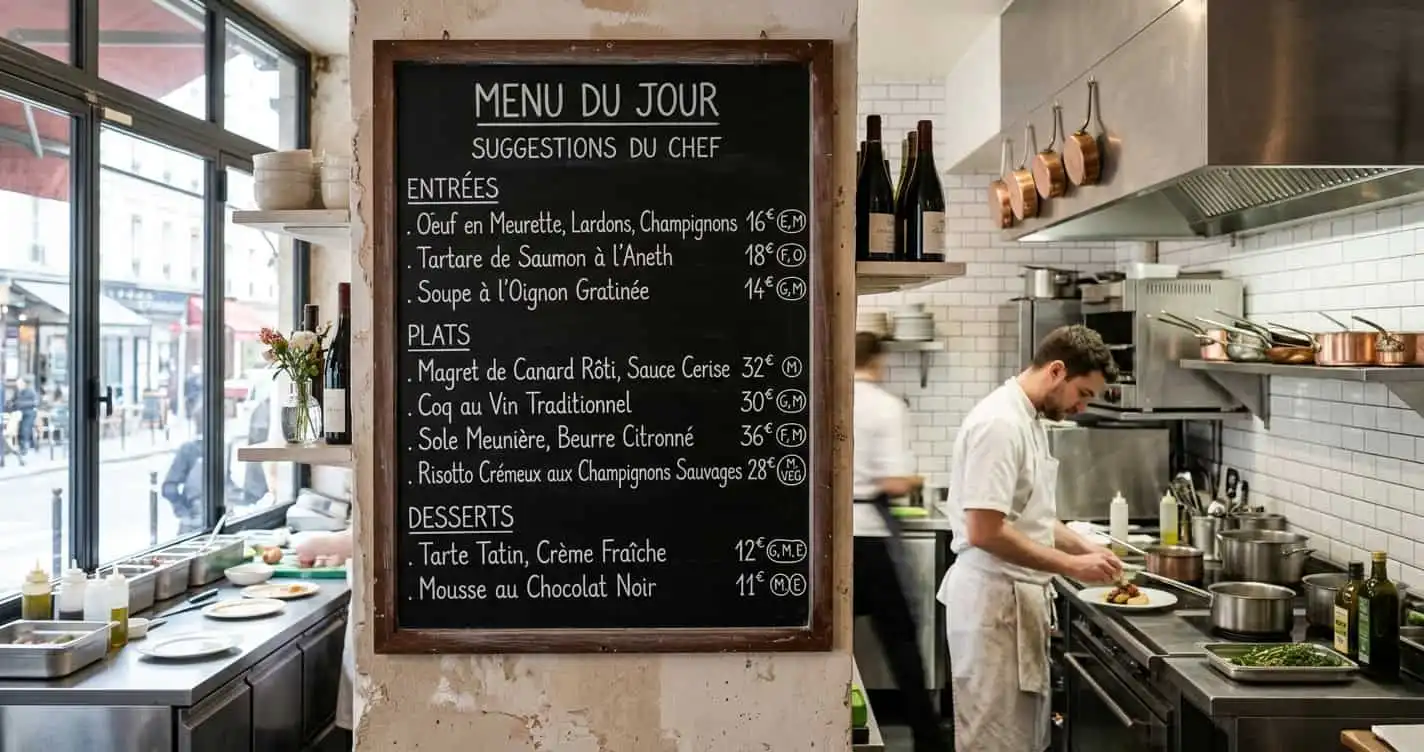
Every season, you change your menu. A trip to the printers, 30 new menus, 30 old ones to bin. Multiply that by four seasons, then add in price adjustments, dishes that are out of stock, and typos that need urgent correction.
For an independent restaurant, this amounts to an average of 700 to 1,000 euros a year on printing — and kilos of paper thrown away every time the menu is updated.
It is one of the most hidden costs in the catering industry. And one of the easiest to cut.
The true environmental cost of paper cards
Let’s work it out for a typical scenario: 30 menus × €6 × 4 reprints = €720 a year on printing alone. For a restaurant that changes its menu every season and adjusts its prices regularly, this figure can easily double.
But beyond the financial cost, there is the environmental impact. Every printed card uses paper, ink and energy. Every reprint generates waste — old laminated cards are not recyclable. And every year, tens of millions of paper order pads are printed in the catering sector, amounting to thousands of tonnes of paper, ink and waste.
Le digital menu It does not solve all the environmental problems faced by a restaurant. But it does eliminate one of them completely and immediately.
What your customers will expect from you in 2026
Restaurants that adopt environmentally responsible practices such as sourcing locally, reducing waste and ensuring transparency attract customers who are mindful of ethics and wellbeing – a trend that will become unmissable by 2026.
Environmental responsibility is no longer a niche selling point. It is a key factor in the decision-making process for a growing proportion of your customers, particularly those under 40, who make up a significant proportion of the catering sector’s customer base. Demonstrating a concrete and measurable approach has become a genuine competitive advantage.
Businesses that adopt a transparent and measurable approach win the trust of customers keen to make different consumption choices.
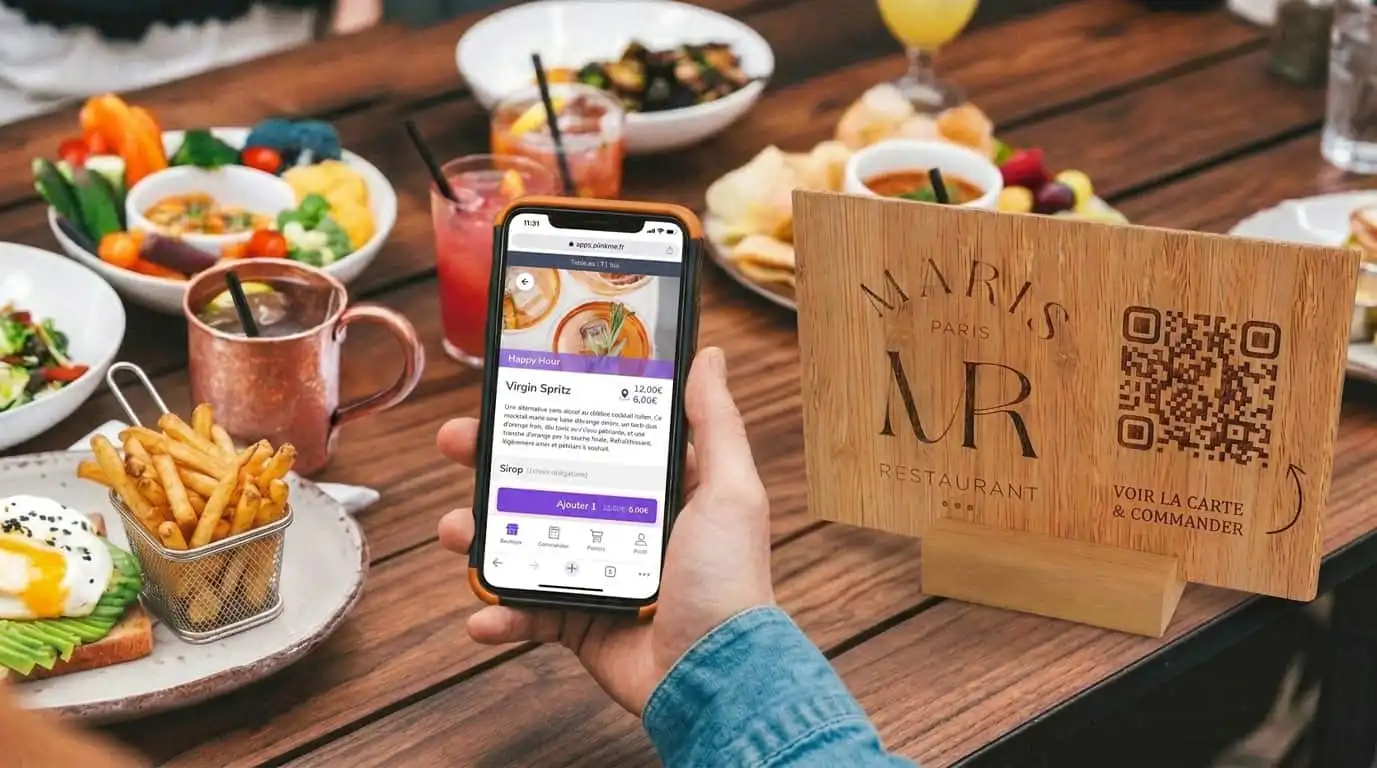
And the best approach is the one that’s visible. A QR code on your table tells your customers something even before they’ve read your menu.
What the digital menu actually changes
1. No printing, no paper waste
This is the most immediate benefit. Your card exists online and can be accessed via a QR code from any smartphone. You can update it from your back office in just a few clicks, without having to go through a printer or throw away old versions.
Price changes, dish of the day, out-of-stock items, new lunch menus: everything is updated in real time and visible to your customers within seconds. Digital menus enable restaurants to reduce their printing costs, update their menus instantly and minimise waste, unlike static paper menus.
2. Less food waste
It is a less obvious link, but one that is just as real. Every day, a significant proportion of food waste comes from restaurants, according to the official data from ADEME on food waste in the catering sector. The digital menu can directly affect this figure.
Digital menus reduce food waste in two ways.
Real-time updates on stock shortages: When a dish is no longer available, you remove it from the menu straight away. Your customers won’t order it, and your kitchen won’t waste time preparing it.
A better understanding of preferences: Some digital menu solutions allow you to track which dishes are viewed and ordered most frequently. This data helps you adjust your stock levels and reduce wastage
3. Allergen compliance without reprinting
Allergen compliance is automated and always kept up to date with the digital menu, which significantly reduces the risk of error.
When a supplier changes an ingredient or a recipe is updated, you can update the allergen information in 30 seconds, without having to reprint the entire menu. This is both an environmental benefit and a simplified legal requirement.
4. Eco-friendly physical accessories
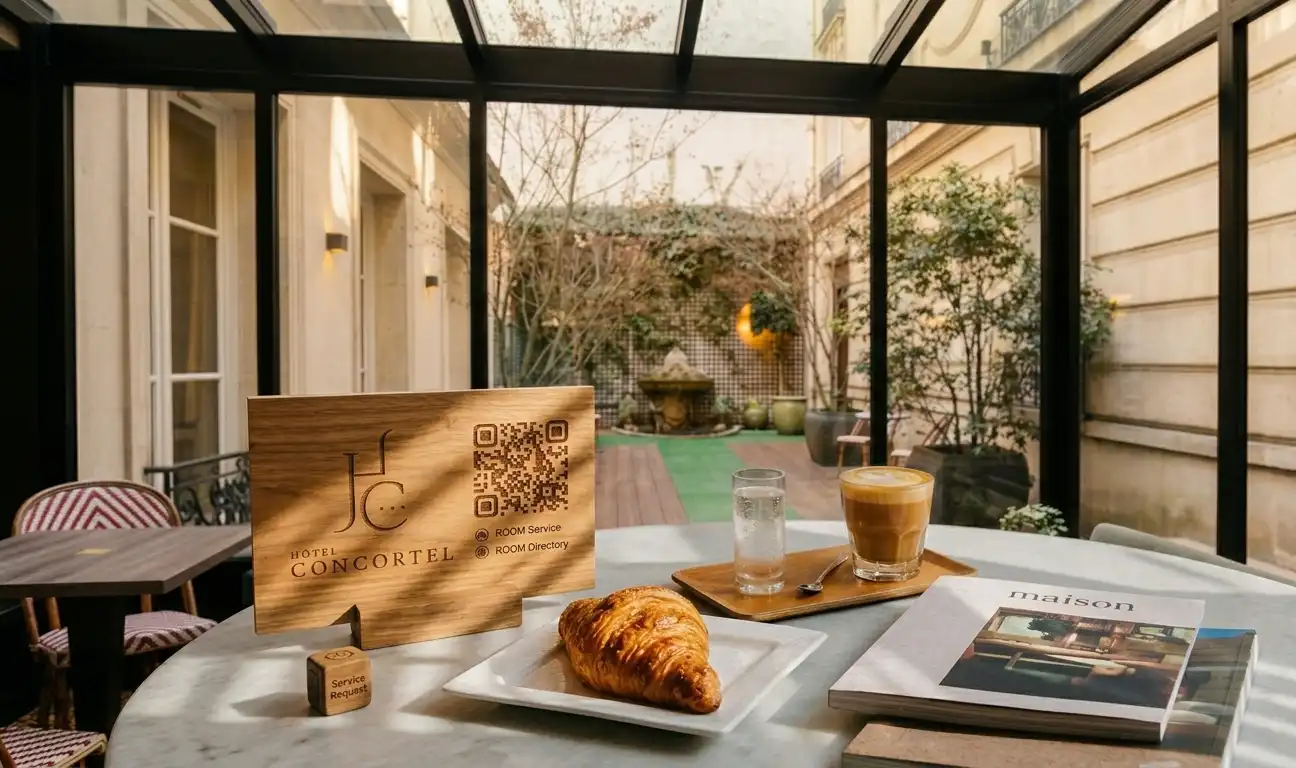
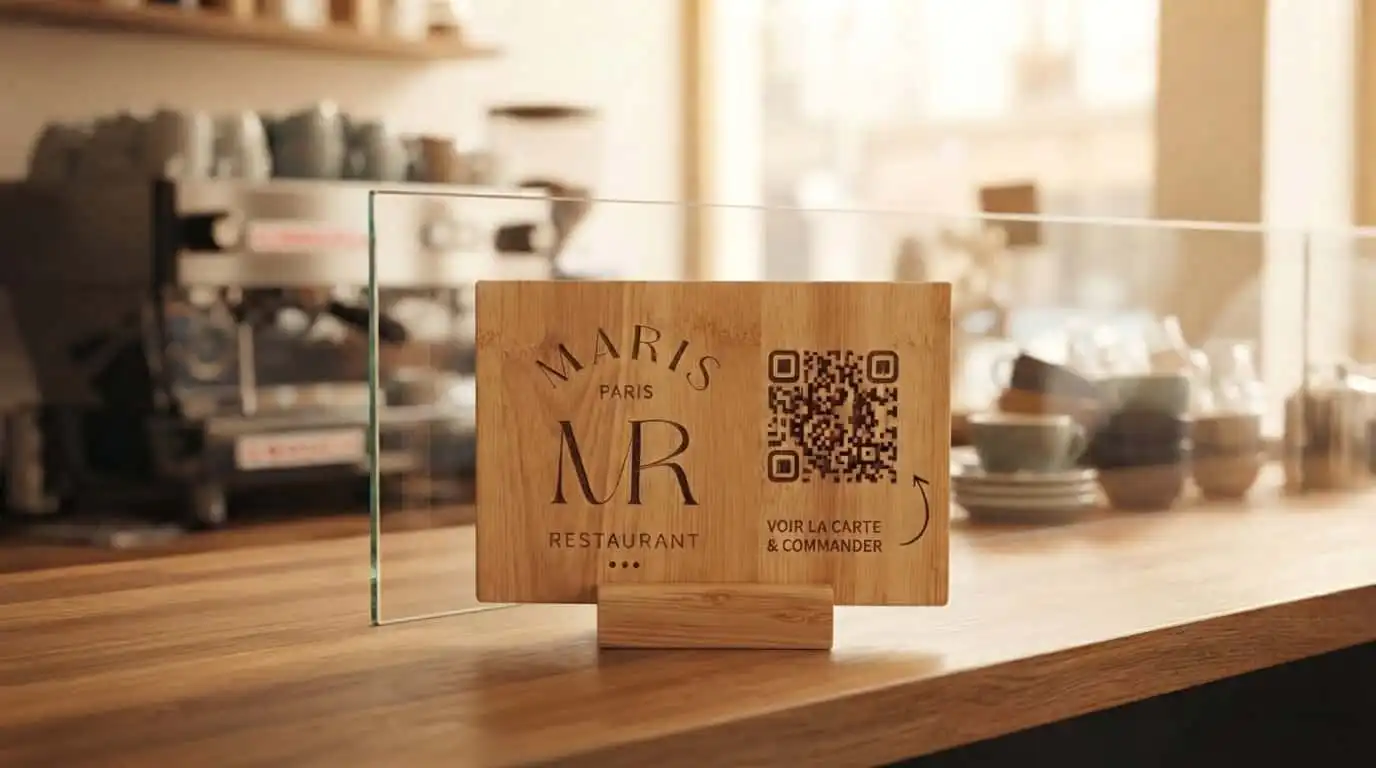
At PIINK Me, the physical medium carrying the QR code is itself designed with sustainability in mind: made from natural wood or bamboo, laser-engraved, with no plastic or ink. A single item for the restaurant’s entire lifespan, however your menu may change.
It’s the opposite of the laminated card that’s replaced every season.
Taking our commitment to environmental responsibility a step further
The digital menu is a concrete and visible first step. To take things further, here are some additional measures:
- Local sourcing: list your producers directly in the digital menu, with a short description or a photo, which can be easily updated
- Reducing waste: Use the data in the menu to adjust your orders with suppliers
- The Resto-score: This indicator, calculated on the basis of 150 criteria, enables restaurant owners to assess their environmental impact and provides greater transparency for consumers. It is a recognised eco-responsible certification scheme in France.
Frequently asked questions
Does the digital menu completely replace the paper menu? It’s up to you. Some restaurants keep a few paper menus for customers who are less comfortable using a smartphone, particularly older guests. The digital menu can easily coexist with a few paper copies, whilst significantly reducing the amount of printing.
Will my customers readily accept the digital menu? By 2026, the vast majority of customers are familiar with scanning QR codes. It has been part of everyday life for several years. Adoption is generally very rapid, especially when the interface is simple and quick.
How long will my PIINK Me wooden QR code last? Laser-engraved bamboo or wooden coasters are designed to last for several years without requiring any special maintenance. They can withstand daily handling and the normal levels of humidity found in a catering environment.
Conclusion
Environmental responsibility in the catering industry may seem complex and costly. A digital menu is one of the few measures that is both simple to implement, immediately visible to your customers, financially viable and measurable in terms of its environmental impact.
No paper. No reprints. Just a single engraved wooden item on every table, to last for years.
Discover the PIINK Me digital menu
Article written by the PIINK Me Team - Digital solutions for the hospitality industry