Allergens in restaurants: how the digital menu can help you comply with the law
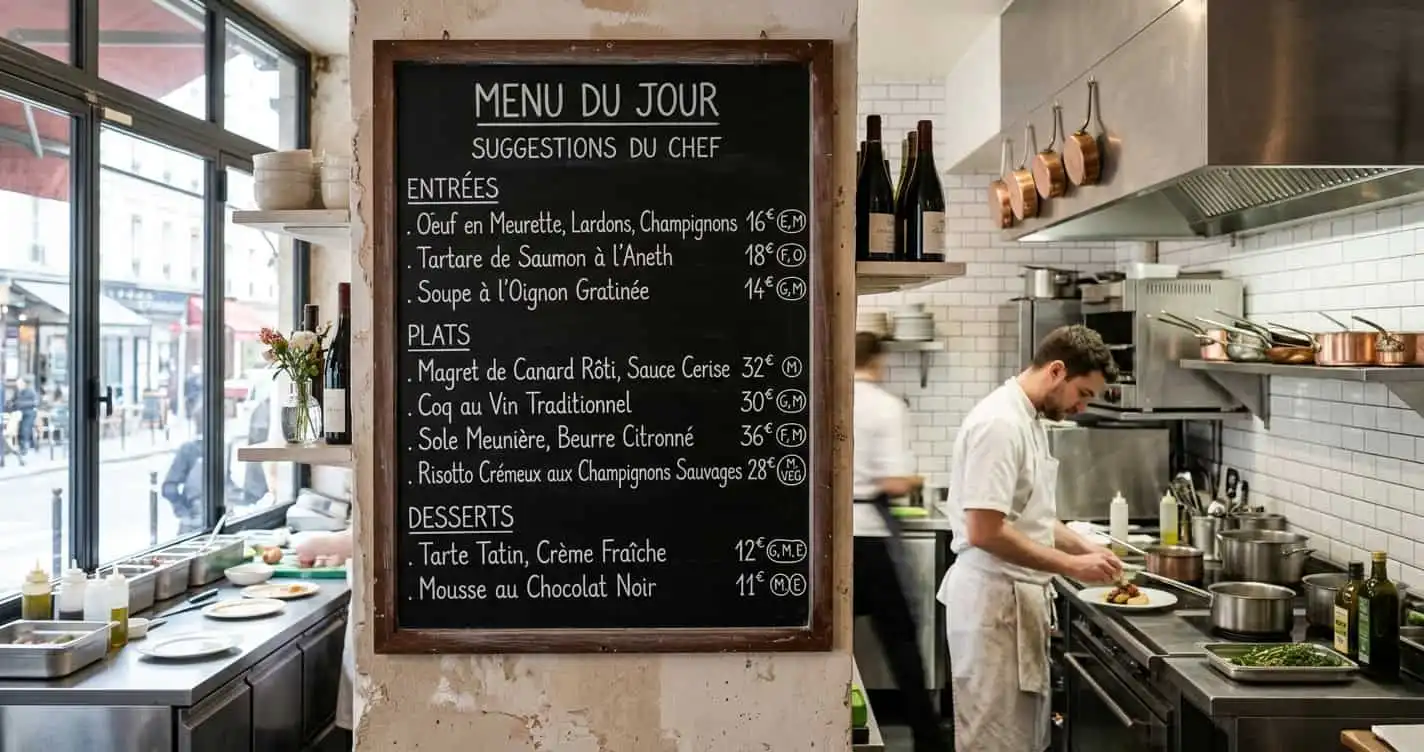
One customer asks if your sauce contains mustard. Another checks whether your dessert may contain traces of nuts. In 2026, these questions are part of everyday life in the restaurant business, and the answer can't be approximate.
If you don't manage allergen information properly, you could be fined up to €1,500 for each breach, or even prosecuted in the event of a serious accident. But beyond the penalty, it's your customers' health that's at stake.
The good news is that the digital menu turns this constraint into a competitive advantage. That's all you need to know.
What the law says about allergens in catering
The INCO regulation: an obligation since 2014, reinforced in 2026
The European INCO regulation (Information of the Consumer) of 2011, applied in France since December 2014, requires all catering establishments to inform their customers about the presence of 14 major allergens in their preparations. In 2026, this obligation remains in full force and applies to all types of establishments without exception.
Who is affected?
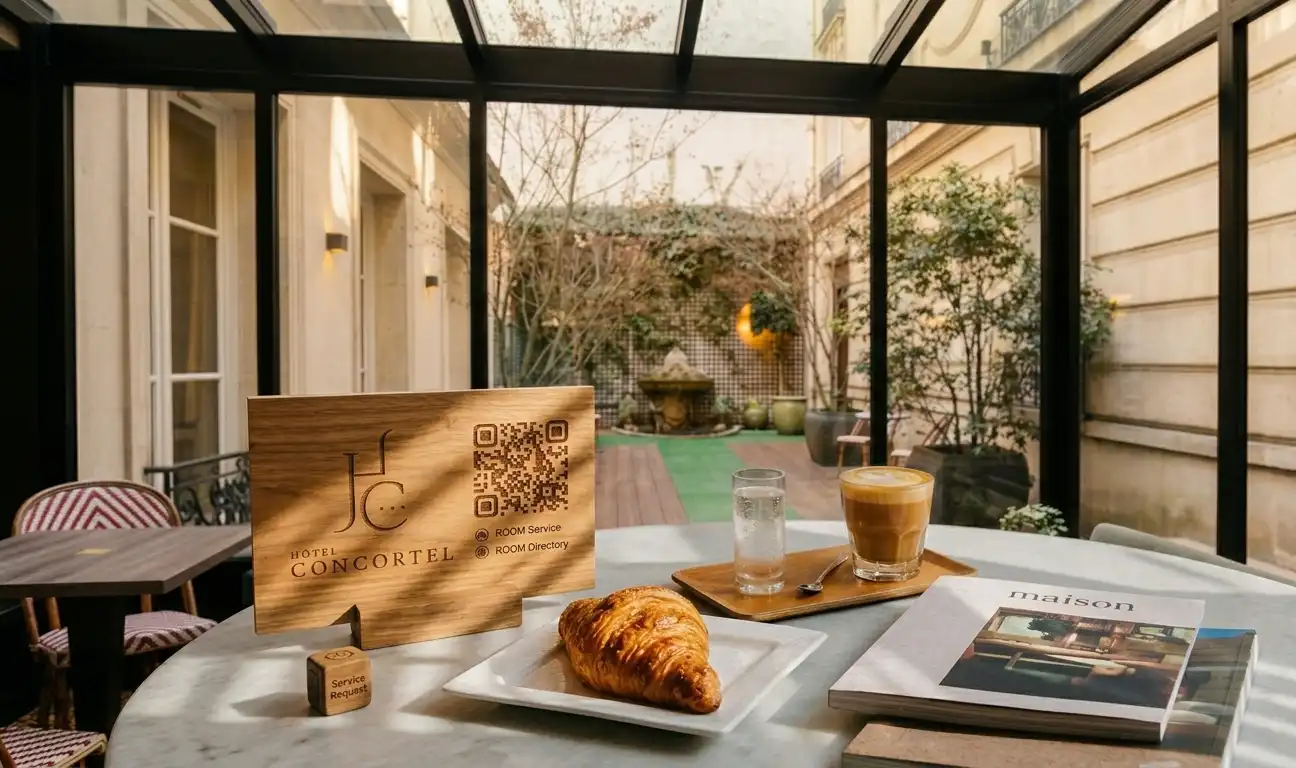
The allergen information requirement applies to all establishments offering meals for consumption on the premises: restaurants, bars with snack bars, hotels (breakfast, room service), snack bars and buffets. It does not apply to takeaways.
The 14 mandatory allergens
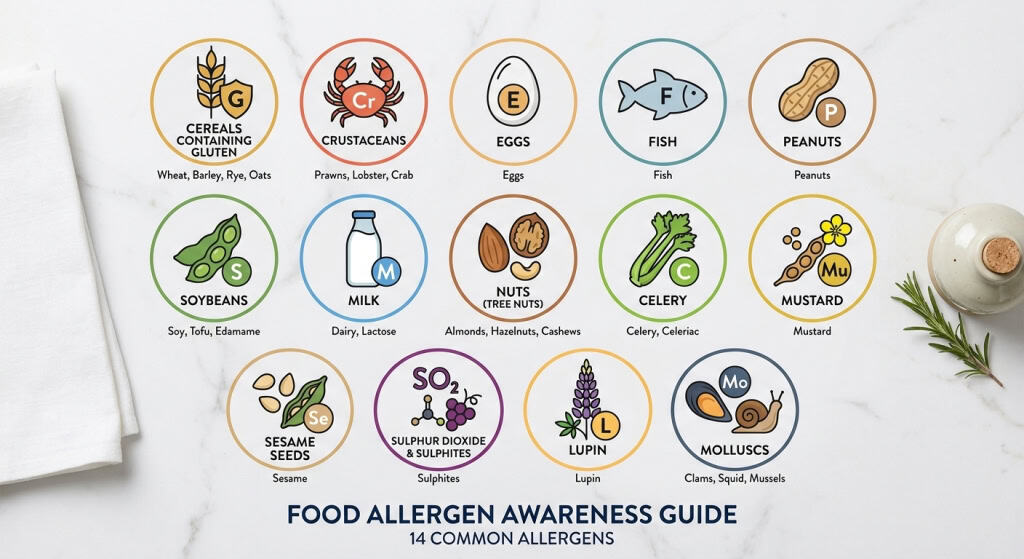
You are legally obliged to display the list of 14 major allergens (EU regulation no. 1169/2011): gluten, crustaceans, eggs, fish, peanuts, soya, milk, nuts, celery, mustard, sesame, lupin, molluscs, sulphites.
It's important to know: you don't have to display a generic list of the 14 statutory allergens. What the law requires is that you indicate only those allergens actually present in the dishes you serve, either voluntarily or through controlled cross-contamination.
The risks of non-compliance
Failure to comply could result in a fine of up to €1,500. (Article R. 412-12 of the French Consumer Code) and you accept civil liability in the event of an allergic accident.
If a customer suffers a severe allergic reaction due to a lack of or poor communication about allergens, the restaurant may be held liable and face legal action for endangerment, negligence or personal injury.
The problem with traditional methods
Paper maps have long been the default solution. But it has one major problem: it's static.
As soon as a supplier changes, a recipe evolves or a new dish is added to the menu, the entire menu has to be reprinted. In practice, many restaurateurs don't do this immediately - and that's where the risk comes in.
Others opt for an allergen register available to customers, or for a manually updated slate. These solutions comply with the law, but they depend entirely on the day-to-day rigour of the team - which, in the middle of a rush, can become complicated.
And what about your customers? They order when they want, without raising their hand or waiting for a waiter to be available. In the sunshine, lying on a deckchair, that's exactly what they're looking for.

How the digital menu solves this problem
Real-time updates from your phone
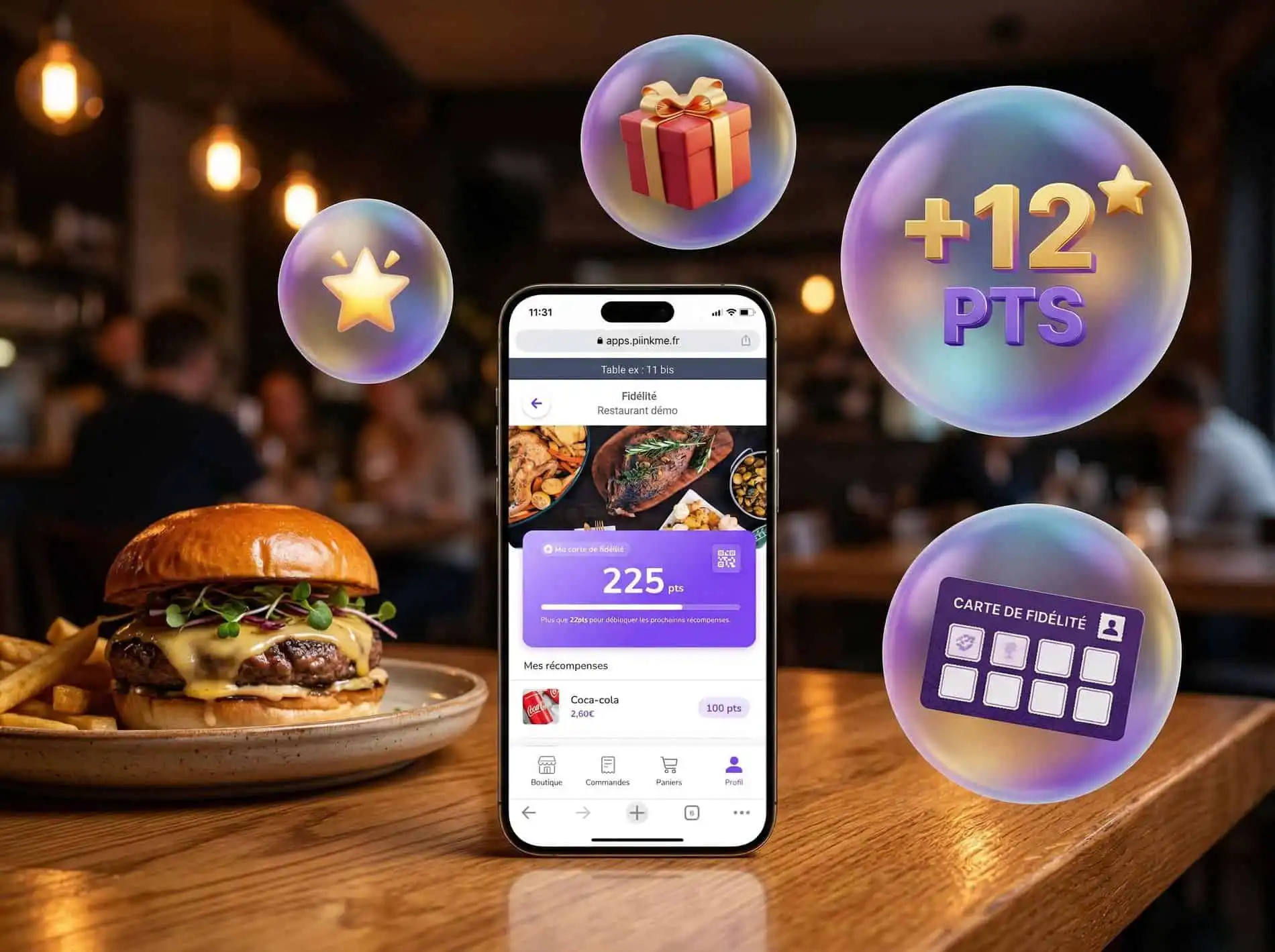
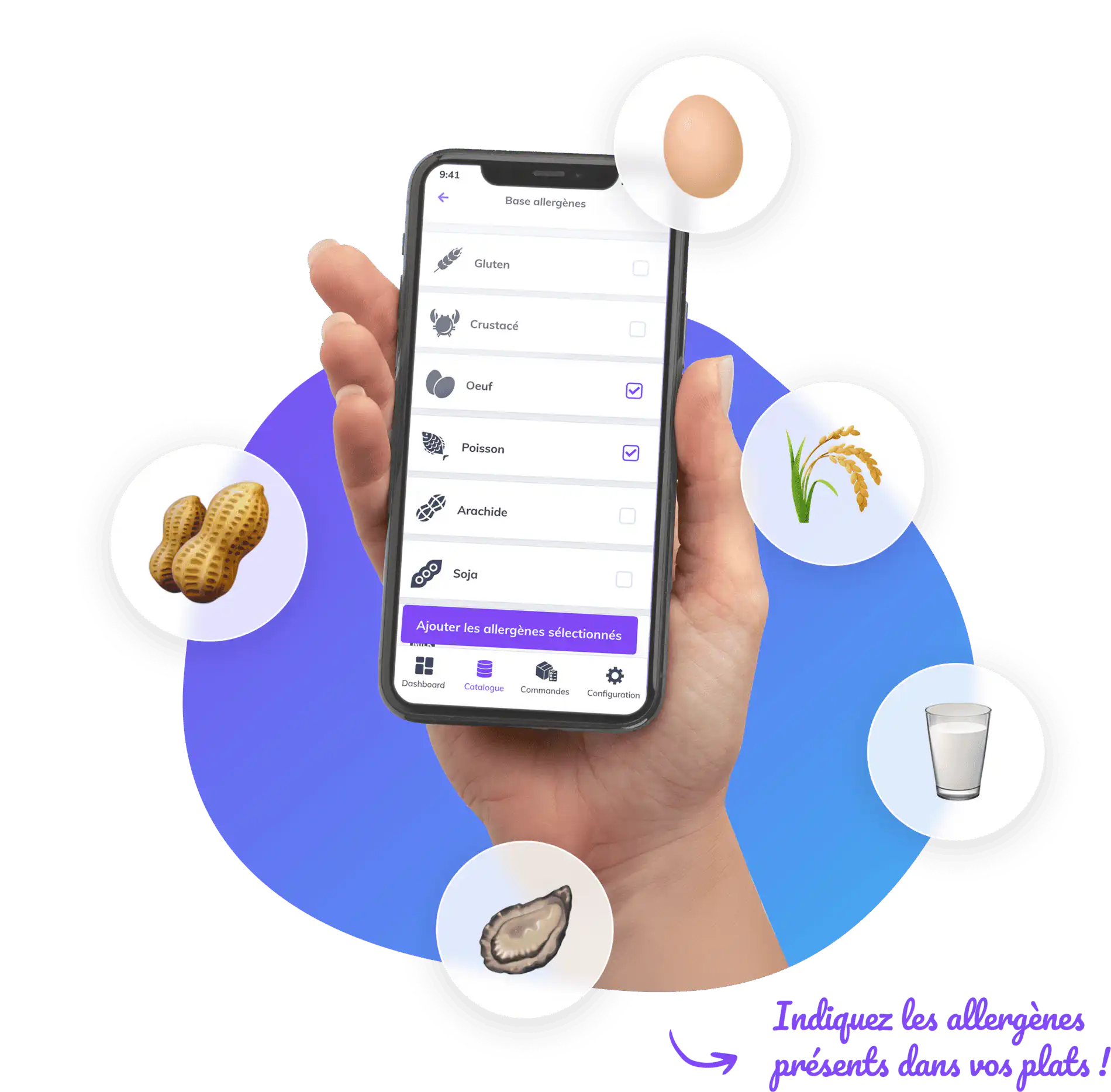
With a PIINK Me digital menu, your allergen information is integrated directly into each product sheet. As soon as a recipe changes or an ingredient is replaced, you update the information in a matter of seconds from your back office - without having to reprint anything.
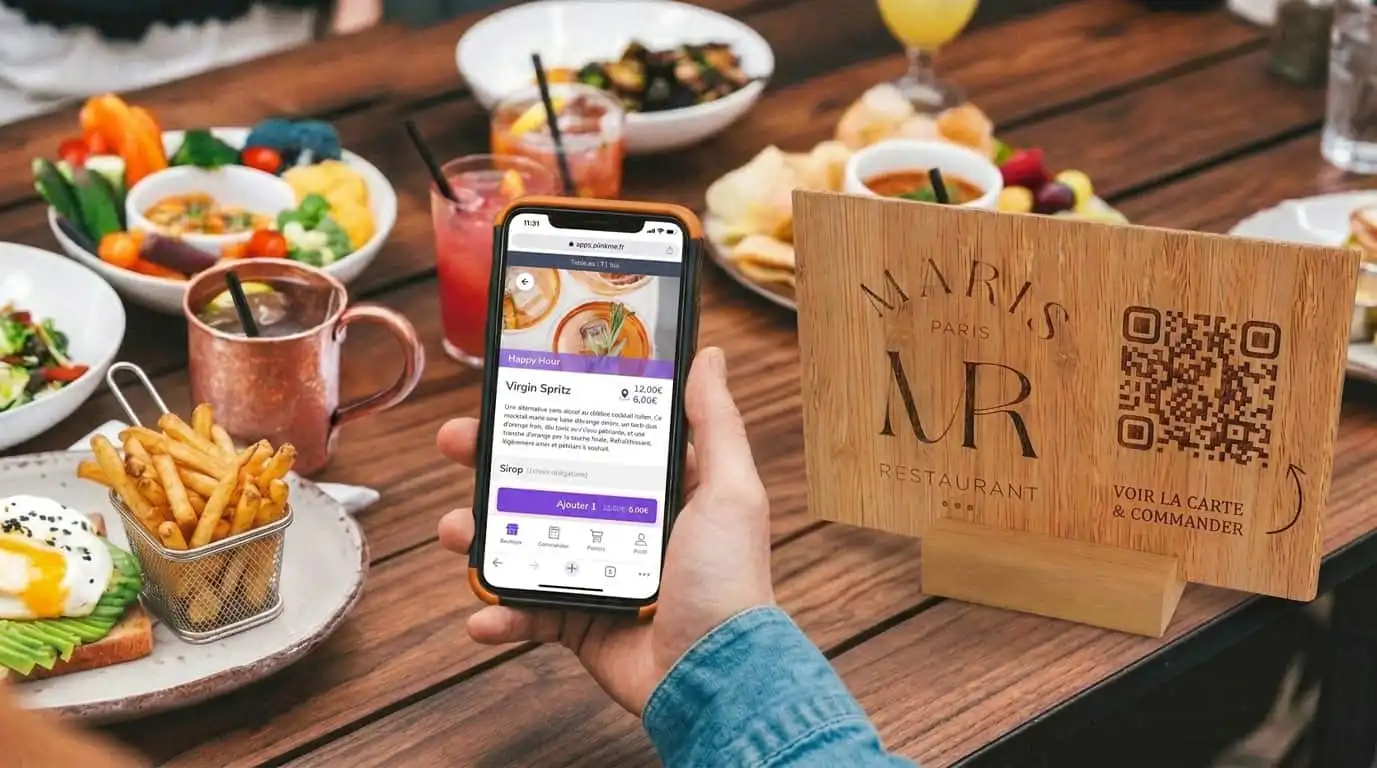
Your customers scan the QR code on their table and instantly see the list of allergens for each dish. The information is always up to date, always accessible, always compliant.
Clear, visible information for your customers
The digital menu displays allergens clearly and visually, with coloured icons for each allergen, a detailed list by dish and the option of filtering by allergy. In just a few seconds, your customers can identify the dishes that are right for them - without having to ask the staff every time they order.
It saves your team time and improves the customer experience.
Multilingual: compliance for all your customers
For establishments serving an international clientele - hotels, tourist restaurants, establishments in coastal areas - allergen information must be understandable to everyone. With PIINK Me, your menu and its allergen information are automatically displayed in your customer's language: English, Spanish, Chinese and many others.
An advantage in the event of a DGCCRF inspection
In the event of an inspection, being able to show an up-to-date digital menu, with allergens clearly identified for each dish, is a strong argument. You can update your allergen information in real time from your back office, without having to rely on a reprint - which considerably reduces the risk of having out-of-date information during an inspection.
What this means for your business
Adopting the digital menu to manage your allergens means :
- Zero risk of forgetting when changing recipes or suppliers
- Zero reprints costly each time the card is updated
- A less busy team on indoor allergen issues
- Ongoing compliance, even in the middle of a rush
- A professional image reassuring for your customers with allergies
And beyond legal compliance, it's also a strong signal to your customers that you take their health seriously.
Allergens and the digital menu: frequently asked questions
Do you have to display all 14 allergens for each dish? No - only those that are actually present in the dish, either deliberately or through possible cross-contamination. The PIINK Me digital menu lets you customise allergens dish by dish.
Is digital signage legally recognised? Yes, the law authorises several forms of display: on the map, via a register, or by digital display. The digital menu is a form of written display that complies with the INCO regulation.
What should I do if a customer has a severe allergy that is not listed? When faced with a customer with a severe allergy, don't hesitate to involve the chef or the person who knows the kitchen best. This is preferable to an approximation. The digital menu does not replace dialogue with your team in the event of a high-risk situation.
Does this apply to takeaway sales? No, the allergen information requirement applies to all establishments offering meals for consumption on the premises.
Conclusion
Allergen compliance isn't an option - it's a legal obligation that makes you liable. And with controls set to be stepped up in 2026, establishments still relying on static paper cards are taking an unnecessary risk.
The PIINK Me digital menu transforms this constraint into a simple routine: real-time updates, clear information for your customers, permanent compliance with no extra effort for your team.
Article written by the PIINK Me Team - Digital solutions for the hospitality industry